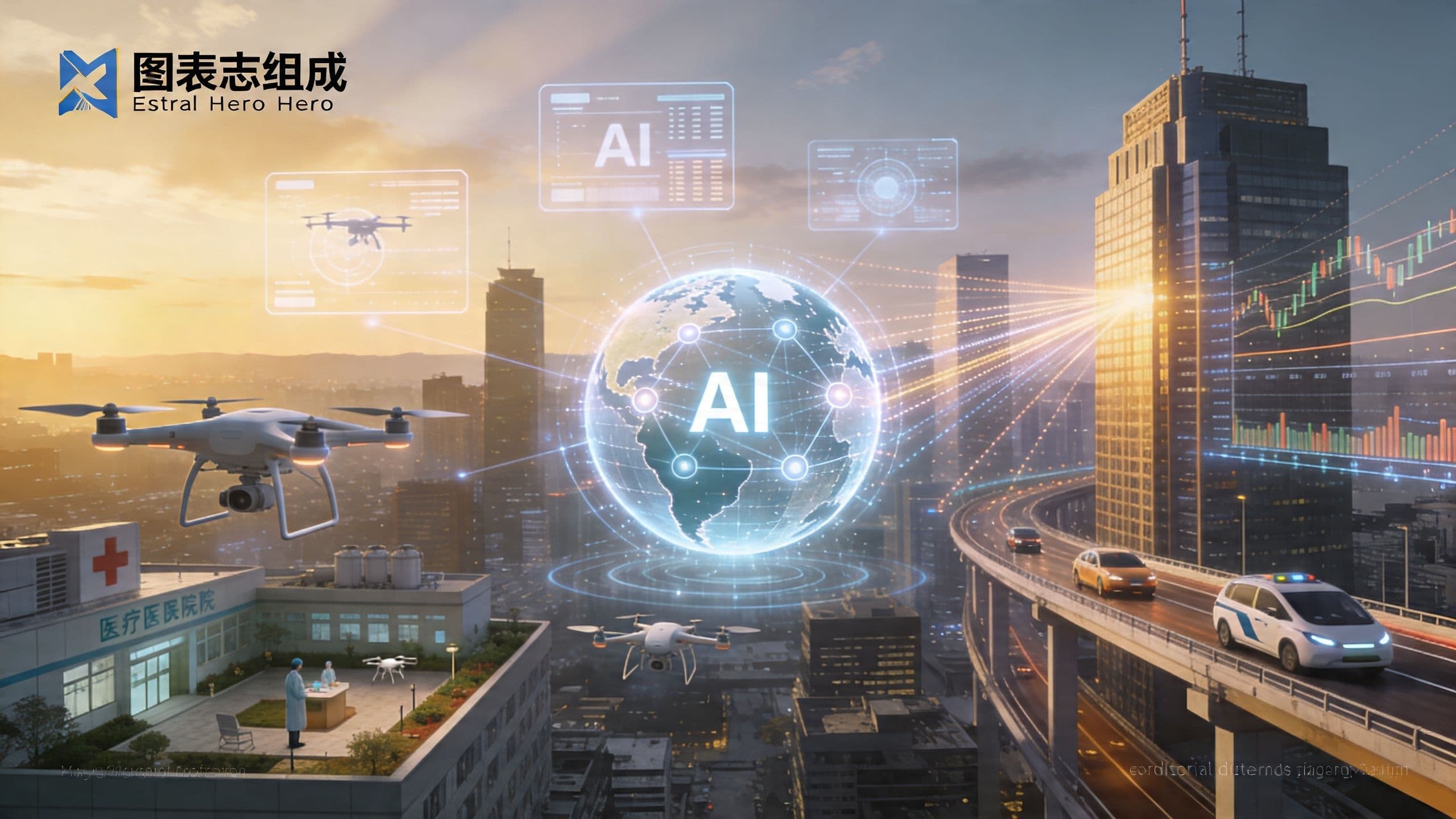
Navigating the Future: AI Digital Trends and Globalization in Research
Explore how artificial intelligence is shaping digital innovation and globalization within future research landscapes. Understand emerging AI trends, real-world applications, and their implications on global collaboration and industry transformation.
Jordan specializes in turning complex artificial intelligence topics into clear, useful explainers for everyday readers.

The Convergence of AI, Digital Trends, and Globalization in Research
Artificial intelligence (AI) has become a pivotal force driving digital transformation across industries and geographies, profoundly influencing how research is conducted and applied worldwide. As AI technologies mature, digital trends intertwine with globalization, creating new avenues and challenges for future research. This intersection reshapes knowledge creation, accelerates innovation, and redefines competitive advantage on a global scale.
Emerging AI Digital Trends Shaping Global Research
Several key AI-driven digital trends are shaping the future of research internationally:
1. AI-Enhanced Collaborative Platforms
Digital transformation includes the rise of AI-powered collaborative tools that facilitate real-time data sharing, joint problem-solving, and multidisciplinary teamwork across borders. Platforms leveraging natural language processing, machine learning, and intelligent automation enable researchers from diverse fields and locations to co-create more efficiently. Examples include AI-enabled virtual labs and cloud-based research environments supporting data-intensive projects.
2. Automated Data Analysis and Augmentation
AI’s ability to process vast datasets and extract insights far exceeds traditional methods. In global research, AI automates tasks like data cleaning, pattern recognition, and predictive modeling. This efficiency accelerates discovery cycles in fields such as genomics, climate science, and social analytics. Moreover, AI aids in augmenting datasets by synthesizing new information from unstructured sources, invaluable for global studies that rely on diverse inputs.
3. Democratization of AI Tools
The increasing accessibility of AI development platforms and open-source frameworks is leveling the research playing field worldwide. Researchers in emerging economies gain access to cutting-edge AI tools without prohibitive costs, fostering broader participation in innovation ecosystems. Initiatives like Google’s TensorFlow and OpenAI’s GPT models empower a global audience to develop customized AI applications relevant to local challenges.
Globalization: Accelerating Research Integration and Challenges
Globalization amplifies the impact of digital AI trends by facilitating rapid knowledge exchange, cross-cultural collaboration, and market entry for new technologies. However, it also brings distinct challenges:
Cross-Border Data Governance and Ethics
AI-driven research increasingly involves multinational datasets, raising complex questions about privacy, data sovereignty, and ethical standards. Diverse regulatory regimes—such as the EU’s GDPR and China’s Personal Information Protection Law—necessitate adaptable AI frameworks that comply without stifling innovation. Future research must emphasize transparency and accountability in AI models to maintain trust globally.
Addressing the Global AI Talent and Resource Gap
While globalization encourages knowledge flow, disparities in AI expertise and infrastructure remain significant between developed and developing regions. Bridging this gap requires targeted policy interventions, international partnerships, and investment in education and research capacity. Collaborative programs between universities, governments, and private sectors can cultivate a more balanced global AI research ecosystem.
Practical Applications Illustrating AI’s Role in Global Research Trends
Understanding these trends is best achieved through concrete examples demonstrating AI’s cross-sector and global influence:
Healthcare Research: AI platforms analyze multinational clinical trial data, enabling faster drug discovery and personalized treatment plans, addressing health disparities across regions.
Environmental Monitoring: AI-powered satellite image analysis supports global efforts to track deforestation, climate change, and biodiversity loss, improving policy responsiveness.
Agricultural Innovation: Researchers utilize AI-driven precision agriculture techniques to optimize crop yields in varied environments, supporting food security globally.
Strategic Takeaways for Engaging with AI and Global Research Dynamics
To maximize the benefits of AI digital trends within an increasingly global research landscape, organizations and researchers should consider:
Prioritizing interoperability and open data standards to facilitate seamless collaboration internationally.
Staying informed on evolving data governance frameworks to ensure ethical AI practices across jurisdictions.
Investing in capacity building and inclusive AI education to reduce talent disparities.
Leveraging AI to automate routine processes, freeing human creativity for higher-value tasks.
These strategies enable stakeholders to harness AI’s full potential while navigating its complexities in a connected world.
Conclusion: Embracing AI’s Role in a Globalized Research Future
Artificial intelligence, digital innovation, and globalization are deeply intertwined forces shaping the future of research. Recognizing and adapting to their combined impact is essential for maintaining competitive advantage, advancing knowledge, and addressing global challenges. As AI technologies evolve, a pragmatic and inclusive approach to their application will define successful research and innovation in the decades ahead.
Safety & Scope
This article is for general informational purposes and does not replace professional advice for complex repairs or installations.
Frequently Asked Questions
+What should readers understand first about artificial intelligence digital trends and globalization future research trends?
Readers should grasp that AI is not just a technological advancement but a catalyst reshaping global research collaboration, data handling, and knowledge production. Understanding how AI facilitates digital trends—such as automated data analysis and collaborative platforms—and how globalization spreads these innovations across borders is key to appreciating future research directions.
+What are the most useful examples or use cases for artificial intelligence digital trends and globalization future research trends?
Notable use cases include AI-driven healthcare research that integrates multinational datasets for faster drug development, environmental monitoring using AI to analyze satellite images worldwide, and precision agriculture applying AI for improved crop yields in diverse climates. These examples highlight AI’s practical impact across sectors and geographies.
+What mistakes should I avoid with artificial intelligence digital trends and globalization future research trends?
Common mistakes include neglecting data privacy and ethical considerations across different regulatory regimes, underestimating the talent and infrastructure disparities between regions, and failing to invest in collaborative tools and open standards necessary for effective international research partnerships. Avoiding these pitfalls ensures responsible and impactful use of AI in global research.