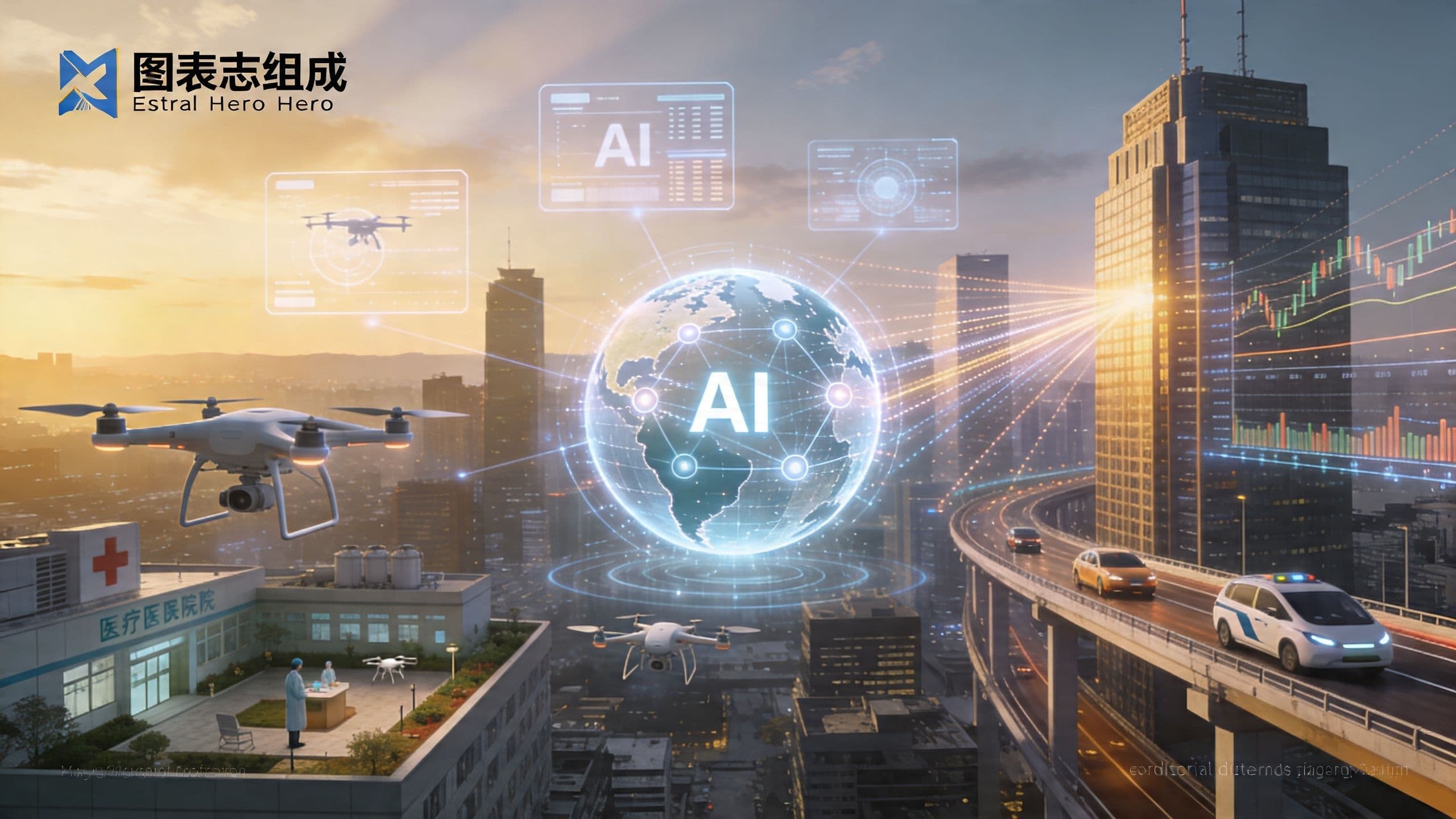
Artificial Intelligence Trends & Future Industry Analysis: Navigating the Next Wave of Innovation
Explore the most impactful trends shaping artificial intelligence today and analyze its future industry trajectory. Understand practical AI applications, emerging tools, and strategic insights for businesses and individuals seeking to harness AI's transformative power.
Jordan specializes in turning complex artificial intelligence topics into clear, useful explainers for everyday readers.

Understanding the Landscape of Artificial Intelligence Today
Artificial intelligence (AI) continues to evolve rapidly, moving beyond theoretical frameworks into tangible, practical implementations across industries. The shift from niche academic research to broad commercial adoption marks this era as a critical inflection point. AI's progress is driven not only by advancements in machine learning models but also by increased data availability, improved computing power, and innovative toolsets that simplify adoption.
Across sectors such as healthcare, finance, manufacturing, and retail, AI is improving operational efficiency, enabling new product experiences, and unlocking data insights that were previously inaccessible. However, successful AI integration relies on selecting the right technologies that align with business goals, understanding ethical considerations, and balancing human oversight with automation.
Emerging Trends Defining Artificial Intelligence's Trajectory
1. Foundation Models and Generative AI: The rise of foundation models, exemplified by OpenAI’s GPT series and Google’s PaLM, has shifted paradigms. These large-scale pretrained models offer versatile capabilities ranging from natural language understanding to image generation, opening new avenues for content creation, customer engagement, and even software development. Generative AI's rapid iteration speed encourages enterprises to experiment with customized applications while also challenging regulatory frameworks on responsibility and transparency.
2. AI Democratization Through Low-Code/No-Code Platforms: Tools like Microsoft’s Power Platform and IBM’s Watson Studio empower non-experts to build AI solutions without extensive coding experience. This trend accelerates AI adoption by lowering technical barriers, fostering innovation among small businesses and frontline workers, and making AI innovation more accessible globally.
3. Edge AI and Real-Time Processing: Advances in edge computing enable AI inference directly on devices such as smartphones, IoT sensors, and industrial equipment. This reduces latency, enhances privacy by minimizing data transmission, and expands AI’s role in domains where real-time response is critical — including autonomous vehicles, smart manufacturing, and healthcare monitoring.
4. Responsible and Explainable AI: As AI applications affect more decisions impacting people’s lives, from lending to hiring, demand grows for models that are transparent, interpretable, and ethical. Various industries are implementing frameworks that ensure fairness, mitigate biases, and provide accountability, which is essential to sustain public trust and regulatory compliance.
Practical Applications Driving Industry Transformation
AI's impact is most evident when seen through real-world deployments. For example:
Healthcare: AI assists in diagnostic imaging, predicting patient deterioration, optimizing treatment plans, and drug discovery. Companies like Zebra Medical Vision leverage AI to automate radiology analysis, while startups focus on personalized medicine using genomics datasets.
Financial Services: Algorithms detect fraud in real time, automate credit risk assessment, and personalize financial advice. AI-driven chatbots improve customer support efficiency alongside biometric security advances.
Manufacturing: Predictive maintenance reduces downtime by forecasting equipment failures. Computer vision monitors production lines for quality control, while robotics automation accelerates assembly.
Retail and E-commerce: Recommendation engines, dynamic pricing, and supply chain optimizations powered by AI refine customer experiences and operational agility.
These cases illustrate AI’s role in augmenting human expertise rather than outright replacement, offering substantial competitive advantage when part of a strategic digital transformation.
Navigating Common Pitfalls and Strategic Considerations
Adopting AI without a clear strategy can lead to costly missteps. Some frequent mistakes include:
Overestimating Capabilities: Treating AI as a magic bullet rather than a tool requiring quality data, domain expertise, and ongoing tuning leads to underperformance.
Ignoring Data Quality and Bias: AI models are only as good as their training data. Failure to audit and correct biased or incomplete datasets risks flawed outputs and reputational damage.
Neglecting Security and Privacy: As AI systems integrate deeply into workflows, protecting sensitive data and ensuring compliance with regulations like GDPR is paramount.
Insufficient Human-in-the-Loop Design: Automation should include opportunities for human review and intervention where ambiguity or high risk exists.
A successful AI strategy integrates clear objectives, cross-functional collaboration, investment in skills, and governance frameworks that align technology with ethical standards.
Looking Ahead: The Future of AI Industry Dynamics
The coming years will likely see AI becoming more contextual, personalized, and embedded within everyday tools. Hybrid AI architectures combining symbolic reasoning with deep learning promise greater robustness and interpretability. Quantum computing, although still nascent, holds potential to revolutionize AI training and optimization.
Moreover, industry sectors will increasingly converge around AI ecosystems, sharing data and innovations to accelerate breakthroughs. Governments and international bodies are expected to shape AI’s trajectory by establishing standards that steer development towards socially beneficial outcomes.
For businesses and individuals, staying informed about AI’s evolving landscape and cultivating adaptability will be critical to harnessing its transformative capabilities effectively and responsibly. Integrating AI as a strategic asset—not just a technology experiment—will define the leaders in this next wave of digital innovation.
---
Artificial intelligence trends underscore a future where AI is deeply intertwined with work and life, offering unprecedented opportunities when approached with clarity and care.
Safety & Scope
This article is for general informational purposes and does not replace professional advice for complex repairs or installations.
Frequently Asked Questions
+What should readers understand first about artificial intelligence trends and future industry analysis?
Readers should first understand that AI is rapidly evolving beyond technical research into practical applications across various industries. Appreciating the significance of foundation models, democratized AI tools, and ethical considerations provides a foundation for grasping how AI impacts business and society today.
+What are the most useful examples or use cases for artificial intelligence trends and future industry analysis?
Key use cases include AI-powered diagnostics in healthcare, fraud detection in finance, predictive maintenance in manufacturing, and personalized recommendations in retail. These examples highlight how AI improves efficiency, accuracy, and customer experiences, serving as practical demonstrations of current trends.
+What mistakes should I avoid with artificial intelligence trends and future industry analysis?
Common pitfalls include overestimating AI capabilities without proper data, overlooking biases in training sets, neglecting privacy and security requirements, and failing to retain human oversight in decision-making processes. Avoiding these ensures responsible and effective AI deployment.