How AI Will Transform the Way We Work: Practical Insights and Emerging Realities
Artificial intelligence is reshaping the workplace by automating routine tasks, augmenting decision-making, and enabling new modes of collaboration. This article explores concrete ways AI tools are changing work across industries, highlights practical applications, and offers guidance on navigating this transition effe
Jordan specializes in turning complex artificial intelligence topics into clear, useful explainers for everyday readers.
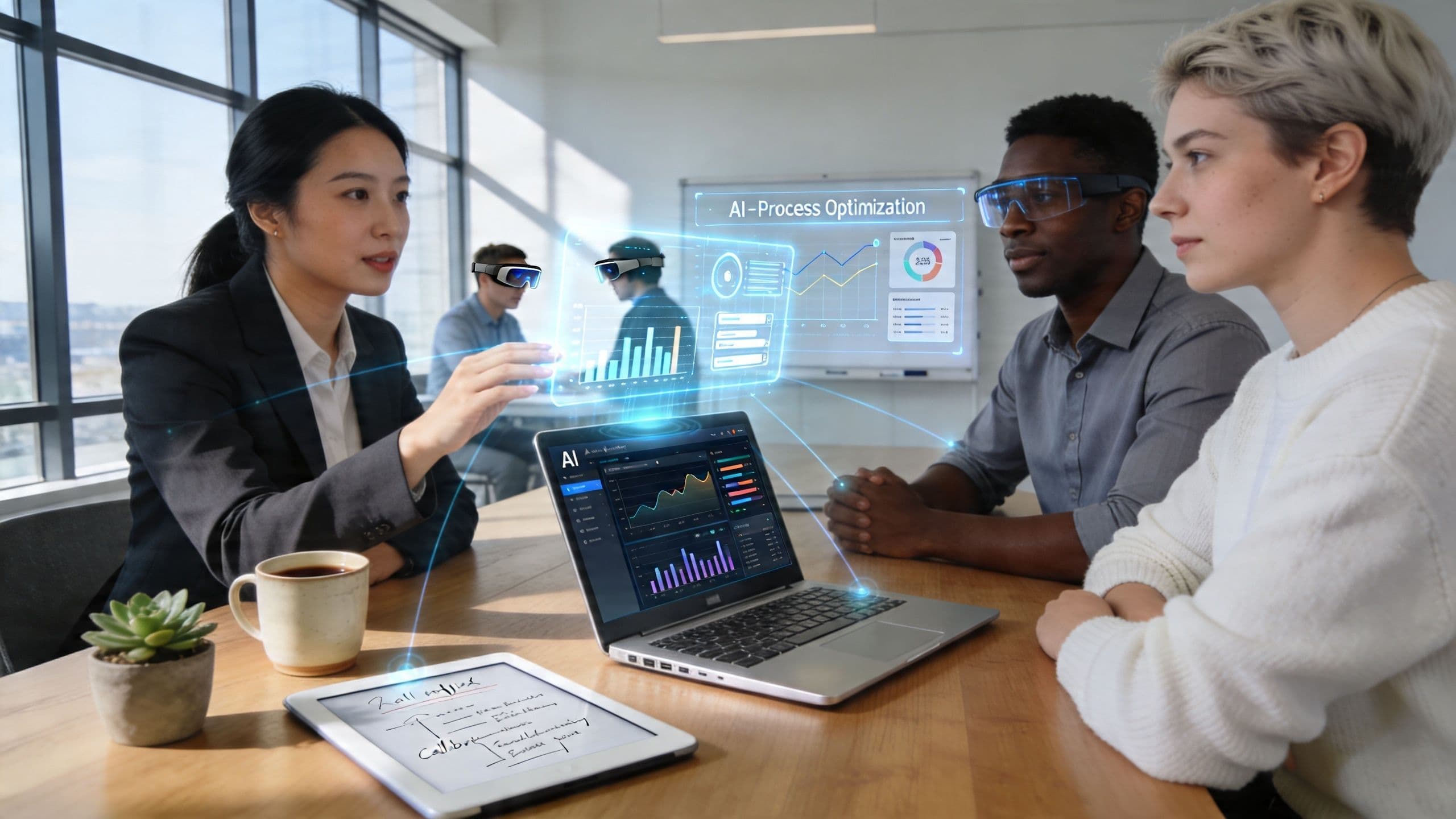
Beyond Automation: AI as a Collaborative Work Partner
The narrative around AI in the workplace has often fixated on automation — the fear or promise that machines will replace humans by performing repetitive tasks more efficiently. While automation remains a core impact, the emerging reality is more nuanced: AI is increasingly serving as a collaborative partner that augments human capabilities. Tools like language models, recommendation systems, and intelligent scheduling assistants are designed to support workers rather than supplant them.
For instance, AI-powered writing assistants such as Grammarly and Jasper help professionals craft clearer content at speed, improving quality without removing the human voice. In customer service, chatbots handle routine queries, freeing human agents to tackle complex issues requiring empathy and judgment. This human-AI synergy enhances productivity and job satisfaction rather than erodes roles.
Industry-Specific Transformations: From Healthcare to Finance
Different sectors are experiencing tailored AI-driven changes with implications for job functions, workflows, and outcomes.
Healthcare: AI algorithms analyze medical images to detect anomalies like tumors earlier and with exceptional accuracy. They assist doctors in diagnosing conditions faster and recommending personalized treatments. Administrative tasks like appointment scheduling and billing are also increasingly automated, allowing healthcare professionals more time with patients.
Finance: AI models manage risk by identifying fraudulent transactions and predicting market trends. Intelligent automation streamlines compliance reporting and customer onboarding. Financial advisors use AI to personalize investment strategies, making wealth management more accessible.
Manufacturing: Predictive maintenance powered by AI helps avoid costly equipment failures by analyzing sensor data. Robotics equipped with AI improve assembly line efficiency and worker safety.
These examples show how AI’s impact is not limited to any one domain but is reshaping core business processes everywhere.
Practical Tips for Integrating AI into Your Work
Adopting AI at work is not simply a plug-and-play affair; success depends on thoughtful integration.
Focus on augmentation, not replacement: Start by identifying tasks where AI can assist rather than fully automate. This preserves the value of human expertise while leveraging AI’s strengths.
Choose domain-appropriate tools: Select AI solutions that align with your industry and specific workflows. Off-the-shelf models can be powerful, but customization is often required for maximum impact.
Prioritize data quality: AI systems depend heavily on clean, relevant data to perform well. Investing in data governance and management pays dividends.
Upskill continuously: Employees should be equipped with AI literacy, understanding how to use tools and interpret results, which fosters informed decision-making.
Maintain ethical oversight: Be aware of potential biases in AI outputs and strive for transparency and fairness in how AI influences work.
Avoiding Common Pitfalls in AI Adoption
The rush to incorporate AI can lead to costly mistakes.
Overhyping capabilities: AI is powerful, but it is not magic. Be realistic about what it can achieve and avoid unrealistic expectations.
Ignoring human impact: Failing to manage change in workforce dynamics causes resistance and dissatisfaction.
Neglecting security: AI projects can introduce data vulnerabilities if security is not embedded from the start.
Underestimating integration complexity: AI often requires substantial changes to IT infrastructure and business processes.
Understanding these risks upfront helps organizations navigate the adoption journey more strategically.
Looking Forward: How AI Will Shape Future Workstyles
AI’s ongoing evolution will create new roles focused on managing, interpreting, and improving AI systems. Hybrid teams of humans and AI agents will become the norm. Remote and asynchronous work will be enhanced by AI-driven virtual collaboration platforms. Moreover, AI will democratize access to expertise, enabling individuals and smaller organizations to compete on a level playing field.
The hallmark of AI’s impact on work will be adaptability. Those who embrace continuous learning and collaboration with AI will thrive in an AI-powered workplace economy.
---
Understanding how AI changes the way we work goes beyond technology; it requires reshaping mindsets and practices. By focusing on augmentation, choosing the right tools, managing data and ethics carefully, and preparing for future shifts, both individuals and organizations can unlock AI’s full potential without losing the human touch.
Safety & Scope
This article is for general informational purposes and does not replace professional advice for complex repairs or installations.
Frequently Asked Questions
+What should readers understand first about how AI will change the way we work?
The fundamental point is that AI is more about augmenting human work than outright replacement. Recognizing AI as a collaborative tool that enhances productivity and decision-making helps frame its role practically and reduces undue fears.
+What are the most useful examples or use cases for how AI will change the way we work?
Key examples include AI-assisted writing and communication tools, chatbots in customer service, diagnostic assistance and administrative automation in healthcare, fraud detection and risk modeling in finance, and predictive maintenance in manufacturing. These applications illustrate AI improving efficiency and creating new ways for humans and machines to collaborate.
+What mistakes should I avoid with how AI will change the way we work?
Avoid overhyping AI’s capabilities or rushing to replace humans without considering augmentation opportunities. Neglecting data quality, ethical implications, security, and employee training are common pitfalls. Also, be prepared for the complexity AI brings in integrating tools into existing workflows.