Traditional AI Use Cases: Real-World Examples Shaping Industries Today
Explore practical examples of traditional AI applications that have transformed industries such as healthcare, finance, customer service, and manufacturing. Understand how classic AI technologies continue to power today's business solutions.
Jordan specializes in turning complex artificial intelligence topics into clear, useful explainers for everyday readers.
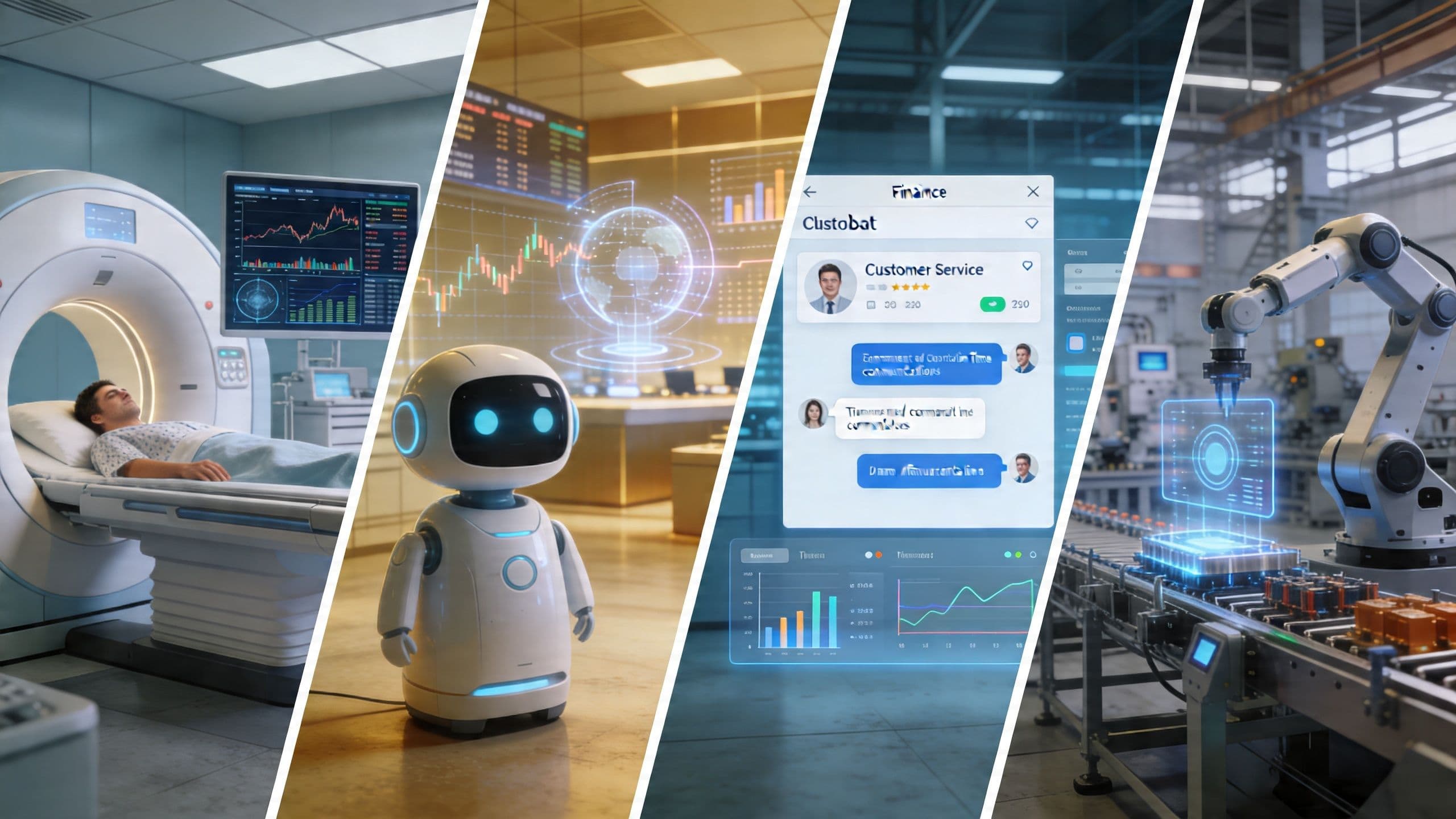
The Enduring Impact of Traditional AI in Modern Industry
Artificial intelligence is often associated with cutting-edge breakthroughs like generative AI and deep neural networks, but traditional AI techniques remain the backbone of many practical applications across industries. These classical approaches, including rule-based systems, machine learning algorithms, and natural language processing, have a proven track record for driving efficiency, reducing costs, and enhancing decision-making processes in real-world business environments.
Healthcare Diagnostics and Predictive Analytics
One of the earliest and most impactful traditional AI use cases is in healthcare diagnostics. Classic machine learning models trained on large datasets of medical images or patient records have enabled more accurate diagnosis of diseases such as cancer, diabetic retinopathy, and cardiovascular conditions. For example, algorithms analyzing X-rays and MRI scans assist radiologists by highlighting areas of concern, speeding up diagnosis and treatment plans.
Predictive analytics powered by traditional AI also helps hospitals forecast patient admission rates and allocate resources efficiently. These models use historical patient data, seasonal trends, and clinical parameters to predict emergency room visits or likelihood of patient readmission, resulting in better capacity planning.
Financial Services: Fraud Detection and Risk Management
In finance, traditional AI has been indispensable for fraud detection and risk management. Machine learning models analyze transaction patterns in real time, flagging anomalies that may indicate fraudulent activities. For example, credit card companies employ these techniques to automatically block suspicious transactions, protecting both consumers and institutions.
Risk management relies heavily on AI algorithms to evaluate credit scores, underwrite loans, and forecast market trends based on historical financial data. These models help financial firms make informed decisions and comply with regulatory requirements without manual intervention.
Customer Service Automation and Sentiment Analysis
Rule-based chatbots and early natural language processing systems have transformed customer service by automating routine inquiries. These traditional AI systems provide quick responses to frequently asked questions, handle appointment scheduling, and direct customers to relevant resources without human assistance.
Sentiment analysis, another classical AI technique, processes customer feedback from social media, emails, or surveys to gauge satisfaction and identify potential issues. Businesses use this insight to improve products and services or to prioritize customer support efforts.
Manufacturing: Predictive Maintenance and Quality Control
The manufacturing sector benefits greatly from AI-driven predictive maintenance solutions, which monitor equipment sensors and analyze data trends to predict potential failures. Traditional AI models detect subtle signs of wear and tear, enabling timely maintenance that minimizes downtime and reduces repair costs.
Quality control is automated using pattern recognition algorithms that inspect products on assembly lines. These AI systems identify defects or deviations from specifications faster and more accurately than manual inspection, ensuring consistent product quality.
Trade-Offs and Limitations of Traditional AI
While traditional AI use cases deliver significant value, there are trade-offs and limitations. Many classical models require large, labeled datasets and may struggle with data variability compared to newer deep learning models. Additionally, rule-based systems lack adaptability, requiring manual updates to accommodate new scenarios.
Despite these constraints, traditional AI techniques often offer faster training times, easier interpretability, and lower computational costs, making them highly practical for many enterprises.
Conclusion: Leveraging Traditional AI for Practical Impact
Traditional AI remains a foundational technology that continues to enhance business processes across sectors. Its proven effectiveness in healthcare, finance, customer service, and manufacturing underscores its role as a practical tool rather than just an academic concept. As businesses explore more advanced AI innovations, combining traditional methods with emerging technologies can yield robust, scalable solutions tailored to unique operational needs.
Safety & Scope
This article is for general informational purposes and does not replace professional advice for complex repairs or installations.
Frequently Asked Questions
+What should readers understand first about traditional AI use cases examples?
It is important to recognize that traditional AI encompasses established techniques like rule-based systems, machine learning, and natural language processing, which have been applied successfully across industries long before the recent surge in AI innovation. These methods focus on practical problem-solving and remain highly relevant today.
+What are the most useful examples or use cases for traditional AI use cases examples?
Key examples include healthcare diagnostics leveraging image analysis models, financial fraud detection systems that monitor transaction patterns, customer service chatbots automating routine interactions, and predictive maintenance in manufacturing that prevents equipment failures.
+What mistakes should I avoid with traditional AI use cases examples?
Avoid assuming that traditional AI models are obsolete; they often provide simpler, more interpretable solutions than newer AI variants. Also, ensure sufficient quality and quantity of data for model training, and beware of rule-based systems becoming outdated if not regularly maintained and updated.